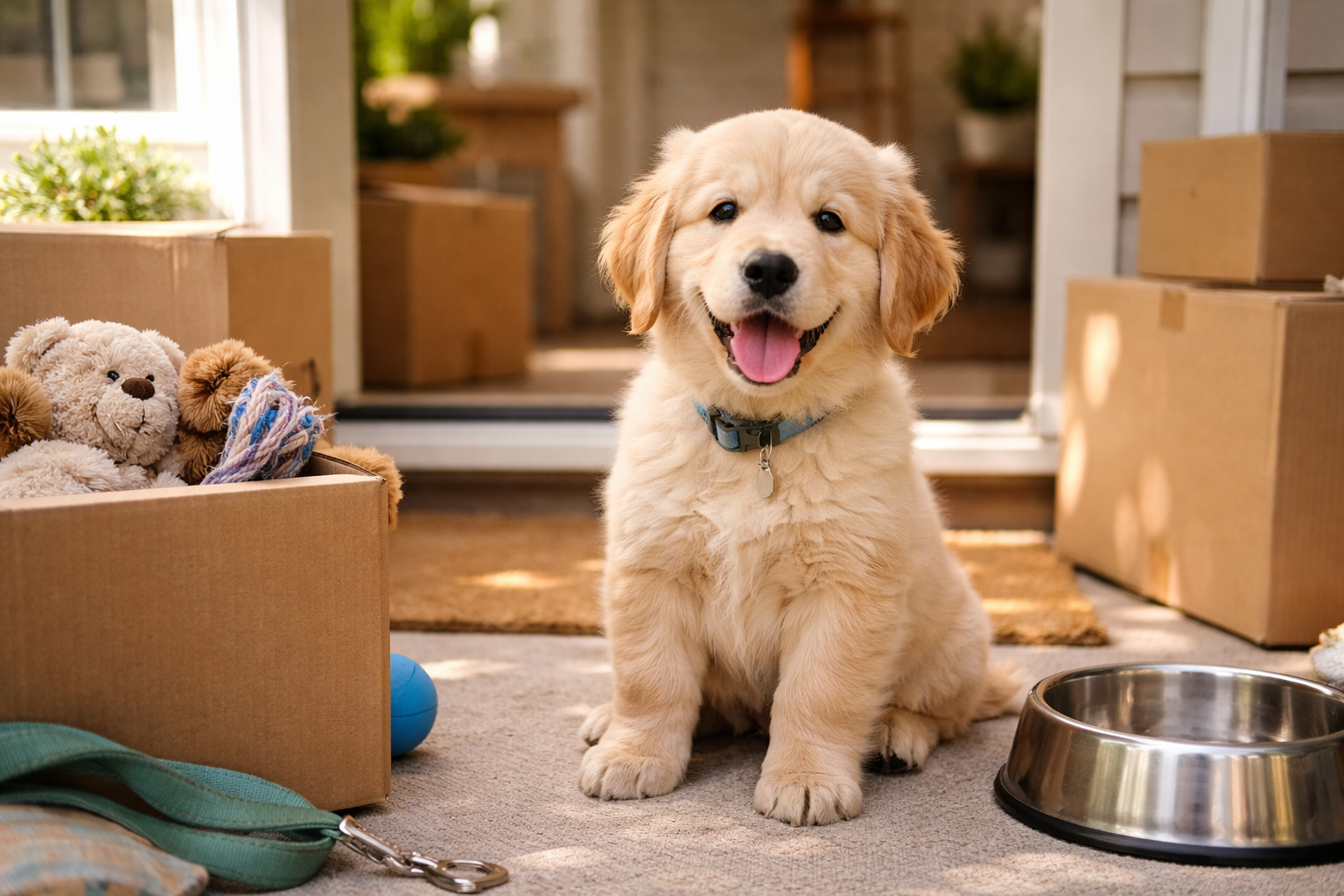
Bringing a new dog home is an exciting moment. Whether it’s a playful puppy or a rescue dog from a shelter, the first days in a new home are extremely important. For the dog, everything is unfamiliar — the environment, the smells, the people, and the routine.
What may feel joyful and exciting to you can feel confusing and overwhelming to the dog. That is why patience, calm energy, and preparation are essential. The goal during the first days is simple: help your dog feel safe.
Prepare Your Home Before the Dog Arrives
Preparation should happen before the dog walks through the door. A calm and organized environment helps your dog settle in much faster.
Things you should prepare in advance:
- A comfortable sleeping area or dog bed
- Food and water bowls
- High-quality dog food
- A collar or harness and leash
- A few toys
- Puppy pads if you are bringing home a puppy
- A safe crate or quiet resting place
Try to create a quiet area where your dog can rest undisturbed. Avoid placing the bed in a busy hallway or a loud area of the house.
Dogs feel more secure when they have their own safe place.
The First Arrival at Home
When your dog arrives, keep things calm and simple. Avoid loud greetings, crowds of people, or too much excitement.
A good approach is:
- Let the dog enter the home calmly.
- Allow the dog to explore at their own pace.
- Do not force interactions.
- Speak softly and move slowly.
Many dogs will immediately start sniffing everything. This is normal and important. Dogs explore the world primarily through their sense of smell.
Your job during this moment is simply to be calm and present.
Creating a Routine
Dogs feel safe when they know what to expect. Establishing a daily routine early will help your dog settle in more quickly.
A simple routine should include:
- Regular feeding times
- Scheduled walks
- Quiet rest periods
- Playtime
- Bathroom breaks
Consistency builds trust. When your dog learns that life in the new home follows a predictable rhythm, anxiety decreases and confidence grows.
Special Considerations for Puppies
Puppies are curious, energetic, and still learning about the world. The first weeks are crucial for training and socialization.
Important tips for puppies:
- Take them outside frequently for bathroom breaks.
- Praise them when they go to the bathroom outside.
- Start basic training early (name recognition, recall, sit).
- Provide safe toys for chewing.
- Be patient with accidents in the house.
Puppies also need a lot of sleep — often 18 to 20 hours per day. Make sure they have a quiet place where they can rest without disturbance.
Special Considerations for Rescue Dogs
Rescue dogs from shelters or previous homes may need more time to adjust. Some dogs arrive with past experiences that affect their behavior.
A commonly known guideline is the 3-3-3 rule:
- 3 days to decompress and overcome the initial stress
- 3 weeks to start understanding the new routine
- 3 months to fully feel at home
During the first days:
- Avoid overwhelming situations
- Keep the environment calm
- Allow the dog to approach you first
- Be patient and consistent
Trust takes time. A rescue dog may need weeks or even months to fully relax and show their true personality.
Introductions to Family Members
If you live with family members, introduce them slowly.
Helpful tips:
- Let the dog approach people on their own terms.
- Avoid hugging or crowding the dog immediately.
- Teach children to be calm and gentle.
- Supervise all interactions between dogs and young children.
Dogs need to learn that the new people in their environment are safe and trustworthy.
Avoid Too Many Visitors in the Beginning
Many people want to meet the new dog right away, but the first days should stay quiet.
Too many visitors can overwhelm a dog that is still adjusting. Instead, give your dog time to settle into the new environment before introducing new people.
A calm start creates confidence and security.
The First Night
The first night in a new home can be difficult for many dogs, especially puppies that were just separated from their litter.
Helpful tips for the first night:
- Keep the sleeping area consistent.
- Use a soft blanket.
- Stay calm if the dog whines.
- Avoid turning the night into playtime.
Some puppies may feel more comfortable if their bed is placed near you during the first nights.
Patience Builds Trust
The most important thing to remember is that every dog adjusts at their own pace. Some dogs feel comfortable within hours, while others need weeks.
Building trust takes patience, calm energy, and consistency.
Your dog does not need a perfect home. What your dog truly needs is:
- Safety
- Stability
- Patience
- Kind leadership
When you provide those things, your dog will slowly begin to understand that they have finally arrived home.
- The Ultimate Guide to Dog Photography

- 10 Mistakes New Dog Owners Make (And How to Avoid Them)

- Bringing Your New Dog Home – How to Help a Puppy or Rescue Dog Settle In

- Traveling with a Dog – How to Make Your Vacation Stress-Free for You and Your Dog

- Why Dogs Are So Good for Us – The Healing Power of Our Furry Friends

- The Ultimate Dog Starter Kit: What You Really Need (And What You Don’t)

- Which dog breed is best for me? – The ultimate guide for prospective dog owners
